Cipher Sees the Matrix
“I don’t even see the code — all I see is blonde, brunette, redhead.”
The Matrix (1999) • The scene that accidentally defined a CSS curriculum.
About The Matrix (1999) — The Film That Changed Everything
The Matrix (1999), written and directed by the Wachowski sisters, is one of the most influential science fiction films ever made. Its premise: the world humans perceive as reality is actually a computer simulation — the Matrix — generated by machines who harvest humanity for energy. A small resistance of “freed” humans fights from a hovercraft called the Nebuchadnezzar, diving into the simulation to battle its agents and, eventually, to find “the One” who can break its rules entirely.
The film won four Academy Awards (all technical: film editing, sound editing, sound mixing, and visual effects) and grossed nearly $465 million worldwide on a $63 million budget. Its slow-motion “bullet time” sequences, its leather-and-sunglasses aesthetic, its techno-Buddhist philosophy, and its green digital rain became instantly iconic. Nearly thirty years later, the imagery is still the universal shorthand for “hacker,” “simulation,” and “seeing through the surface.”
The Matrix is rated R (violence and brief language). The scene featured here — Cipher at the monitors — is the film’s most CS-classroom-friendly moment: no violence, no profanity, just a man reading code and a quote that has lived in computer science pedagogy ever since.
The Scene — “I Don’t Even See the Code”
Cipher (played by Joe Pantoliano) is the Nebuchadnezzar’s operator — the crew member who stays jacked out of the Matrix while others enter it, watching the simulation as cascading green symbols on a bank of monitors. He has been doing this so long that he no longer needs to decode the symbols. He reads them the way an expert reads a page: not character by character, but as meaning, pattern, and presence.
He does not see raw data anymore — he sees the thing the data represents. Green columns of symbols have become human hair, fabric, a face. The simulation’s source code has become transparent to him. He has achieved the highest form of technical fluency: the point at which the representation vanishes and only meaning remains.
For a developer, this is the goal. A novice learning HTML sees <div> tags, color hex codes, and `margin` values. An experienced developer looks at a webpage and sees the structure behind it — the boxes, the flex containers, the font stacks. Cipher’s moment of seeing “blonde, brunette, redhead” in raw code is a perfect metaphor for what CSS mastery actually feels like.
Why This Scene Lives at TNT — The “See the Code” Connection
TNT has a venue called “See the Code.” The premise: a student looks at a real-world image — a motivational poster, a typographic sign, a layout — and uses only HTML and CSS to recreate it. No image files. No JavaScript. Just code.
This is exactly what Cipher describes, run in reverse. Cipher looks at code and sees the image. A “See the Code” student looks at the image and learns to see the code — the font-weight: 900 behind a bold headline, the background: #000 behind a dark poster, the display: flex; flex-direction: column; align-items: center behind a centered list.
The Matrix rain is also the perfect visual companion. TNT’s sister site TNT Sandbox hosts a live Matrix rain simulation built entirely in HTML5 Canvas and JavaScript. It is the kind of project that results from learning to see — and then build — what you see on screen.
TNT also has its own Matrix Rain cover page — Matrix Rain (TNT) — built right here in the workspace. Cipher would approve of either.
See the Code — Entry #1: Zero Talent
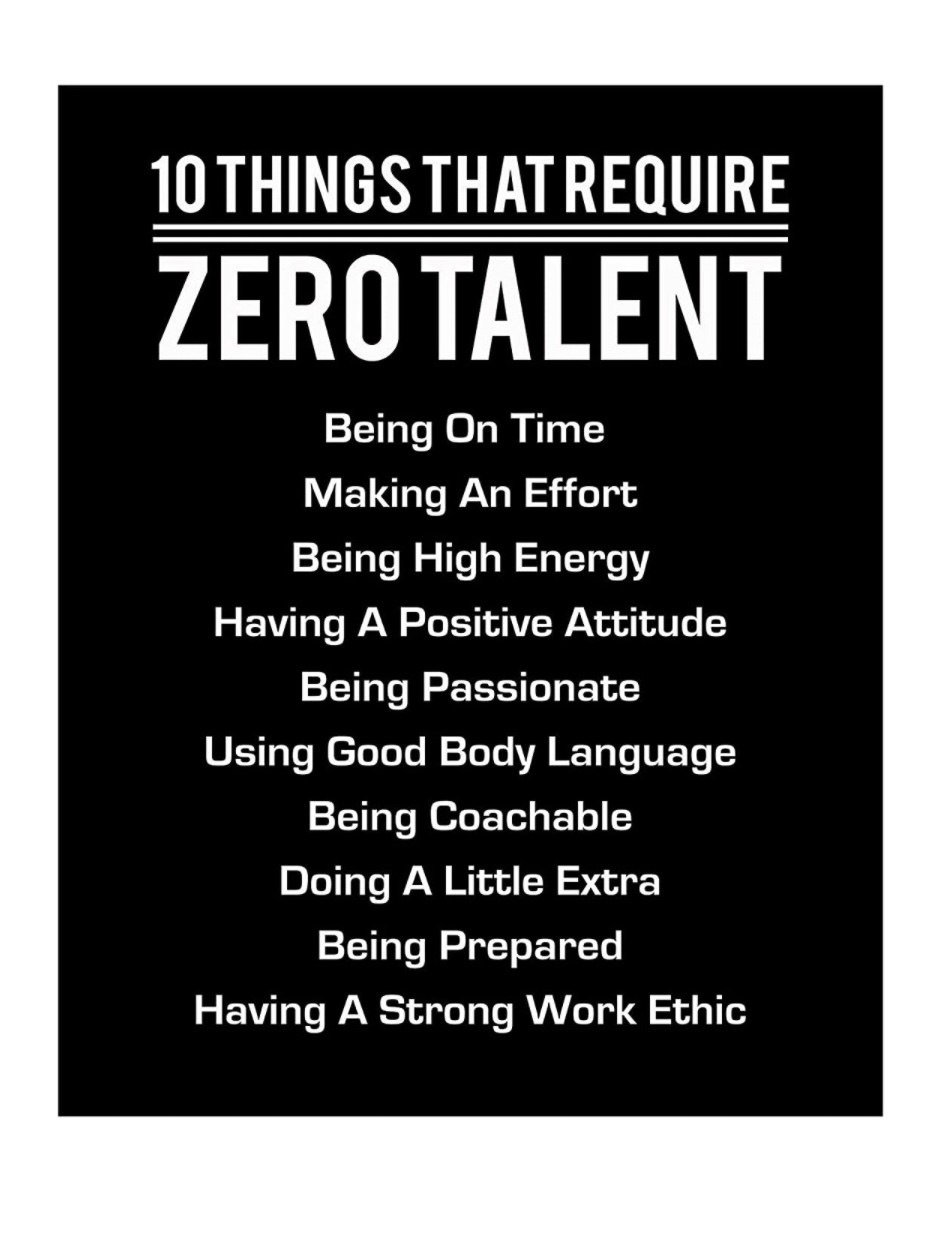
Start with an image. Build it in code.
This motivational poster — black background, bold condensed type, double-rule divider — is Entry #1 of TNT’s See the Code venue. The original is a .jpg. The recreation uses nothing but HTML and CSS. No image file. No JavaScript. Just font-weight, display: flex, and border.
Movie clip is only available in larger viewports.
On some mobile devices, rotating to landscape will allow viewing.