Movie Clips
Clips that spark ideas, fuel curiosity, and occasionally
blow our minds — right here in class.
Intelligence: Imagination > Knowledge

(2004)
VIKI’s logic is undeniable — and that’s the problem. Asimov’s Three Laws, the AI alignment problem in two minutes, and why this film keeps getting more relevant. Companion to Ask Copilot #079.

The Ancient One teaches Strange that spells are structured instructions with parameters — which is exactly what a function is. Companion to the Interactive Mystic Shield.

Pythonic Ghost
Henry, in cahoots with AI, created a
charming ghost using Python Processing
Watch the magic and explore his saga!

of Christmas
Two takes on a 250-year-old cumulative carol: Pentatonix sings all twelve verses a cappella; the HISHE Villain Pub sings it sideways. Companion to the TNT song-builder app that reimagines the gifts for math, Java, JS, and Python class.

a Lemur?
NOVA profiles Elizabeth Brannon’s work at the Duke Lemur Center: ring-tailed lemurs trained on a number-discrimination rule can apply it to quantities they’ve never seen. Companion to the TNT Lemur Game.

for Brains
The Scarecrow’s 1939 wish song — and the clever irony that he never actually lacked a brain. Plus fun facts about the film and TNT’s quadratic parody: “If I Only Had a Vertex.”

Mash
“He did the mash!” Bobby Pickett’s 1962 novelty hit topped the charts twice — and inspired TNT novices to style 'Monster Mash' lyrical pages in 2023. Check out Trey L’s Monster Mash — Unity Edition for the latest adaptation!

Developers must create their apps to work seamlessly on mobile devices. Jimmy Buffett's song should remind us of this!

Three films, one lesson: raw power without training is dangerous. HTML, CSS, and JavaScript are your superpowers — DevTools is your Danger Room.

People Eater
Sheb Wooley’s 1958 classic — the perfect icebreaker for a first CSS lesson on color, selectors, and the cascade.

Four
Marvel’s First Family powers our curriculum: HTML, CSS, JavaScript & Bootstrap 5 — four heroes, one unstoppable web stack.

Needs Siri
Scotty speaks into a 1986 Mac mouse and discovers the keyboard. “A keyboard — how quaint.” The scene that accidentally predicted Siri by 25 years.

Reverse Eng.
Ben Affleck reverse-engineers his way out of a global conspiracy.

Will Robinson!
The iconic robot's warning — and what it means for your Java setters.

Zoom
A mesmerizing fly-in through the Mandelbrot Set from Mathigon.

Pictures
A Wizard of Oz scene showing how imagery can carry its own voice.

Abby
Context for the classic newspaper advice-column reference, that inspired our Ask Copilot page.

Mambo
Three random lights. One halfway rule. Tens of thousands of dots. What emerges is a perfect Sierpiński Triangle — order from chaos, set to “Boogie Fever” by The Sylvers.

Talkin’
The Bee Gees’ 1975 funk-disco classic — the groove behind our “Vibe Codin’” programming parody.

Archimedes
The original discovery moment — the legend behind the name of our DWR & Eureka log.

Bread
Nelson Eddy’s 1939 classic — the inspiration for our “Mama’s Little Function” parody about functions in code.

History
The Liberty Bell, the one-armed bandit, and the RNG — the real history behind the reels. Companion to the Slot Machine Saga app.

Christmas Lights
Will communicates from the Upside Down through flickering Christmas lights — the scene that inspired our LightWrite simulation.

Code
Cipher's "I don't even see the code" scene, plus a direct link to the modern Matrix Rain cover page.

History & Inside
Where did the Magic 8-Ball come from — and what’s actually inside? Two clips covering the origin story and The Action Lab’s hands-on teardown.

a Funeral
When They Come for Me
A virtual AI band by one human. AI visuals, human lyrics, Suno+Audacity pipeline — a CS masterclass in prompt engineering and digital ethics.

the Alphabet
The Three Stooges crash a women’s college and teach a nested-loop algorithm — set to music, 1938 style.

Adventures!
Moe, Larry, and Curly follow clues they don’t fully understand and find the treasure anyway. The patron saints of TNT Adventures.

Game of Life
Four rules. Two cell states. Arbitrary computation. John Conway’s 1970 cellular automaton — the CS classroom’s best demonstration of emergence and Turing completeness.

Story
Oracle’s official documentary — James Gosling and the Green Project team tell the inside story of Oak, the coffee-cup logo, and “Write Once, Run Anywhere.”

of Python
Guido van Rossum’s 1989 holiday hobby became the world’s most popular programming language. From the ABC roots and Python 1.0 to the Python 2→3 transition and today’s AI-powered era.

on AI
The man who built Microsoft Research Asia, led Google China, and wrote AI Superpowers explains what AI can — and cannot — do, and why the answer to its disruption is a more human future.

World
The Sherman Brothers’ 1964 UNICEF ear worm — TNT’s most devious tool. The melody behind two CS parodies: It’s a DOM World and It’s an OOP World.

Activate!
Zemo reads the HYDRA trigger words — a state-machine lesson hidden inside a thriller. Companion to the Activate Novices video player and the Winter Soldier Wake word-stream app.
π Gambit
An evil entity possesses the Enterprise computer. Spock’s counter: compute π to its last digit. There is no last digit. Star Trek, 1967.

Overload
Young Clark Kent’s x-ray vision activates in class and he cannot turn it off. The perfect metaphor for a novice developer first opening DevTools. Companion to Ask Copilot #030.

(1983)
A teenage hacker asks a Defense Department AI to play Global Thermonuclear War. It agrees. The film that put AI risk and hacker culture on the national agenda — and still asks the right questions.
(1978)
The stirring theme music by John Williams and an iconic clip of Superman saving Lois Lane from danger; The inspiration behind our beloved Movie Credits Simulator

A reminder to follow the breadcrumbs — responsibly —and not get lost in the forest.

the Leader
The Lost Boys march behind Peter Pan singing an ear-worm that sticks for decades. Motivation for the Follow the Leader trail-documentation activity.
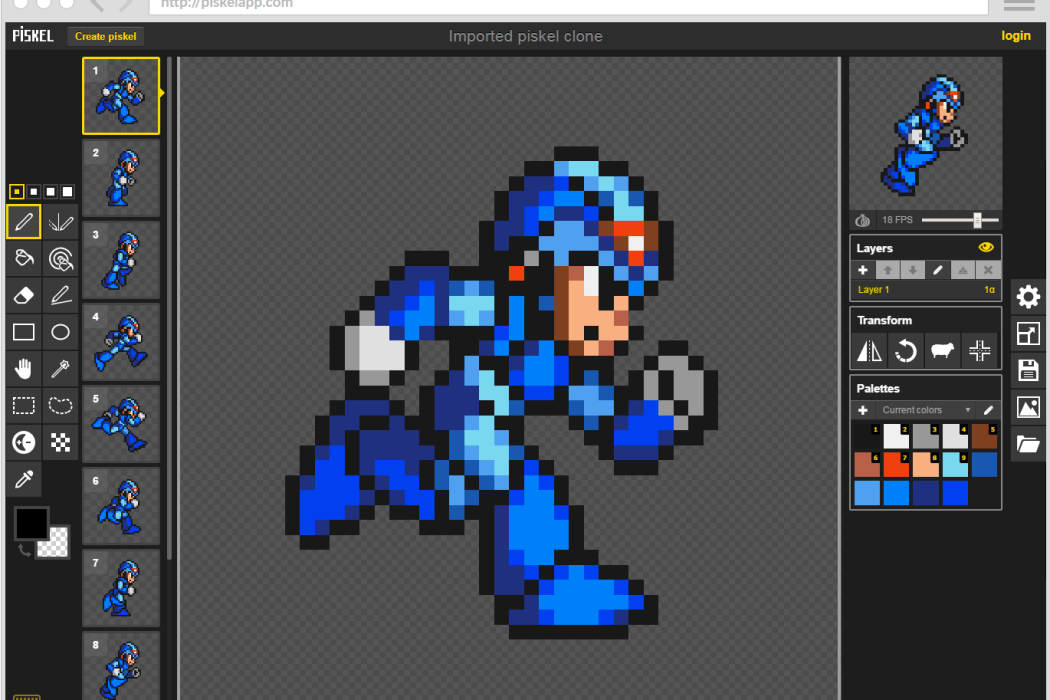
Tutorials
Three short lessons by TJ FREE: first pixel to finished sprite sheet. The tool Sergio Z used to build his animated slime — companion to the Piskel Cheat Sheet.

(Elton John)
Elton John’s 1972 anthem about an astronaut heading into the unknown — and the perfect soundtrack for Griffin’s p5.js Rocket animation. Burning out his fuse up here alone…

Five clips from Andrew Adamson’s adaptation of C.S. Lewis’s classic: trailer, the White Witch, Aslan’s death, resurrection, and the healing breath that restores frozen statues — the scene the Narnia Simulation Saga models directly.

Clips Index
The full archive of TNT movie clips from 2022–2025. (Coming soon.)